
Sizing
What Size Dumpster Do I Need?
A plain-English comparison of the 10, 15, 20, 30 and 40 yard containers available across Pittsburgh and Allegheny County, so you book the right size the first time.
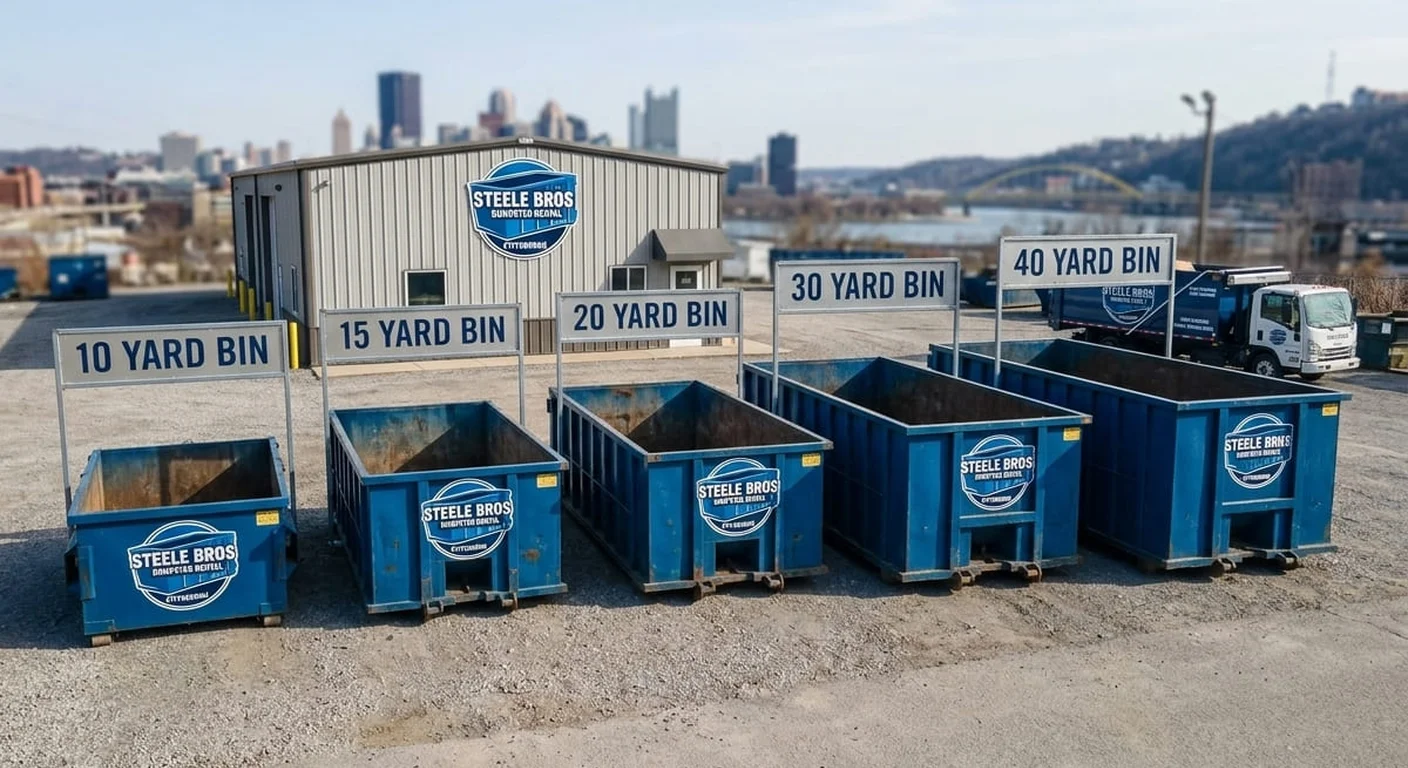
The question we hear most often from people calling about a project in Pittsburgh or the surrounding boroughs isn't about price — it's "what size do I actually need?" Guess too small and you're stuck making a second call mid-project. Guess too large and you're paying for a container that sits mostly empty on a narrow West End street. We connect homeowners and contractors across Allegheny County with a network of local, licensed and insured haulers running five standard sizes — 10, 15, 20, 30 and 40 yard — and matching the right one to your job is the single biggest factor in whether the rental feels effortless or like a hassle.
Why Size Matters More on Pittsburgh's Hills
Pittsburgh isn't a flat grid of identical lots. On the same week, the hauler we match to a job might drop a 10 yard container in a tight driveway in Sheraden, a 30 yard box on a new-build lot in Robinson Township, and a 20 yard for a roof tear-off in Elliott. Older boroughs like Crafton, Green Tree and Heidelberg were laid out decades before roll-off trucks existed, so driveway width, street grade and overhead clearance all factor into which size actually fits — not just how much debris the project will generate.
Every size in the network comes with flat-rate pricing that covers delivery, pickup and disposal — the only real decision is which box fits the job and the property. Here's how the five stack up.
Dumpster Size Comparison Chart
| Size | Dimensions | Holds About | Typical Weight Limit | Best For |
|---|---|---|---|---|
| 10 Yard | 14 ft L x 7.5 ft W x 3.5 ft H | 3-4 pickup truck loads | 1-2 tons | Garage or basement cleanout, small bathroom remodel, single-room declutter |
| 15 Yard | 16 ft L x 7.5 ft W x 4.5 ft H | 5-6 pickup truck loads | 2-3 tons | Mid-size cleanout, fence or deck removal, small yard-debris jobs |
| 20 Yard | 22 ft L x 7.5 ft W x 4.5 ft H | 6-8 pickup truck loads | 3-4 tons | Kitchen or full bathroom remodel, roofing tear-off, flooring replacement |
| 30 Yard | 22 ft L x 7.5 ft W x 6 ft H | 9-12 pickup truck loads | 4-5 tons | Whole-home cleanout, additions, larger construction debris |
| 40 Yard | 22 ft L x 7.5 ft W x 8 ft H | 12-16 pickup truck loads | 5-6 tons | New-construction builds, commercial teardown, major demolition |
Notice the 20, 30 and 40 yard boxes share the same 22 ft by 7.5 ft footprint on the ground — they just get taller. That matters on a narrower lot in McKees Rocks or Carnegie: a 40 yard needs the same width as a 20 yard, it just holds a lot more once it's set.
Volume Isn't the Whole Story — Weight Matters Too
A 20 yard container full of cardboard and old furniture and a 20 yard full of roofing shingles or wet drywall look identical from the curb, but they weigh completely differently. Asphalt shingles, brick, concrete and river-valley clay soil are dense materials that hit a weight limit long before a container looks full. If your project involves shingles, concrete, dirt or masonry, the hauler will usually recommend a slightly larger box specifically for the weight allowance, not the volume. See our roofing tear-off sizing guide for a real-world example.
Matching Size to the Job
Home Cleanouts and Decluttering
A single-room or garage cleanout in most Pittsburgh-area neighborhoods fits comfortably in a 10 yard. Clearing out an entire house — ahead of a move or an estate cleanout — usually calls for a 20 or 30 yard, especially in the larger older homes common around Green Tree and Bridgeville. Our whole-home cleanout weekend plan walks through staging a bigger job room by room.
Remodels and Renovations
Kitchen and bathroom remodels generate a mix of cabinetry, tile, drywall and fixtures — a 15 or 20 yard usually covers it. Pre-WWII homes near Pittsburgh's older boroughs sometimes turn up plaster and lath instead of drywall, which is heavier per square foot, so expect the hauler to ask a few extra questions about the age of the house before recommending a size.
Roofing Projects
Asphalt shingles are dense. A typical single-layer tear-off on an average Pittsburgh-area rooftop fits a 20 yard; a two-layer tear-off or a larger roofline often needs a 30. Full details in our roofing dumpster sizing guide.
New Construction and Major Builds
Robinson Township and Coraopolis both see steady new-build activity, and haulers in our network deliver a regular run of 30 and 40 yard boxes to framing and finish-out sites. Builders juggling multiple lots often set up a rotating swap schedule rather than a single container — see our new-construction cleanup guide and construction debris disposal guide for how that works.
Winter Storm and Yard Debris
After a lake-effect snow band or an ice storm moves through Allegheny County, downed limbs and storm debris pile up fast. A 15 or 20 yard handles most single-property cleanups; larger properties or multiple downed trees can push that to a 30. More in our winter storm debris cleanup guide.
Common Sizing Mistakes We See
Assuming Bigger Is Always Safer
A larger container isn't automatically the "safe" choice. Beyond the footprint issue on a tighter city lot, an oversized container for a light-debris job means paying for capacity you'll never use. Right-sizing works in both directions — don't undersize a heavy-material job, but don't oversize a light one either.
Forgetting About Access
Overhead clearance matters as much as ground footprint. Low tree limbs, power lines, or a steep, narrow driveway common in older boroughs like Heidelberg can all limit where a container can actually be set, regardless of what size would otherwise fit. Mention any overhead obstructions or grade changes when you call so the right truck approach gets planned.
Not Accounting for Multiple Debris Types
A single project sometimes generates more than one kind of debris — say, a kitchen remodel that also involves ripping out an old wood deck. Mention every part of the job, not just the main one, so the size recommendation accounts for the full scope rather than the first thing you mention.
How Delivery and Placement Work
Once you've settled on a size, we schedule a delivery window with the hauler we match to your job — often the same day if you call before noon. The hauler positions the container exactly where you'd like it, sets protective boards underneath on paved surfaces, and walks you through fill guidelines before heading out. Nothing about the process changes based on size; a 10 yard and a 40 yard both get the same careful placement and driveway protection.
When in Doubt, Call and Describe the Job
We would rather ask three quick questions and connect you to the right container than have you guess and call back. Tell us the project, roughly how many rooms or how large the pile is, and whether you have driveway or street placement, and we will recommend a size — and get you a flat rate — on the same call. We match dumpster sizes to jobs across every neighborhood in Pittsburgh and every nearby Allegheny County town we serve, and getting you the right container the first time is always faster than a mid-project swap.
Need a container in Pittsburgh or anywhere in Allegheny County? Call (412) 850-4148 and describe the job. We will name the size, the flat rate and a delivery slot — often the same day. No forms, no waiting on an email.