
Sizes & capacity
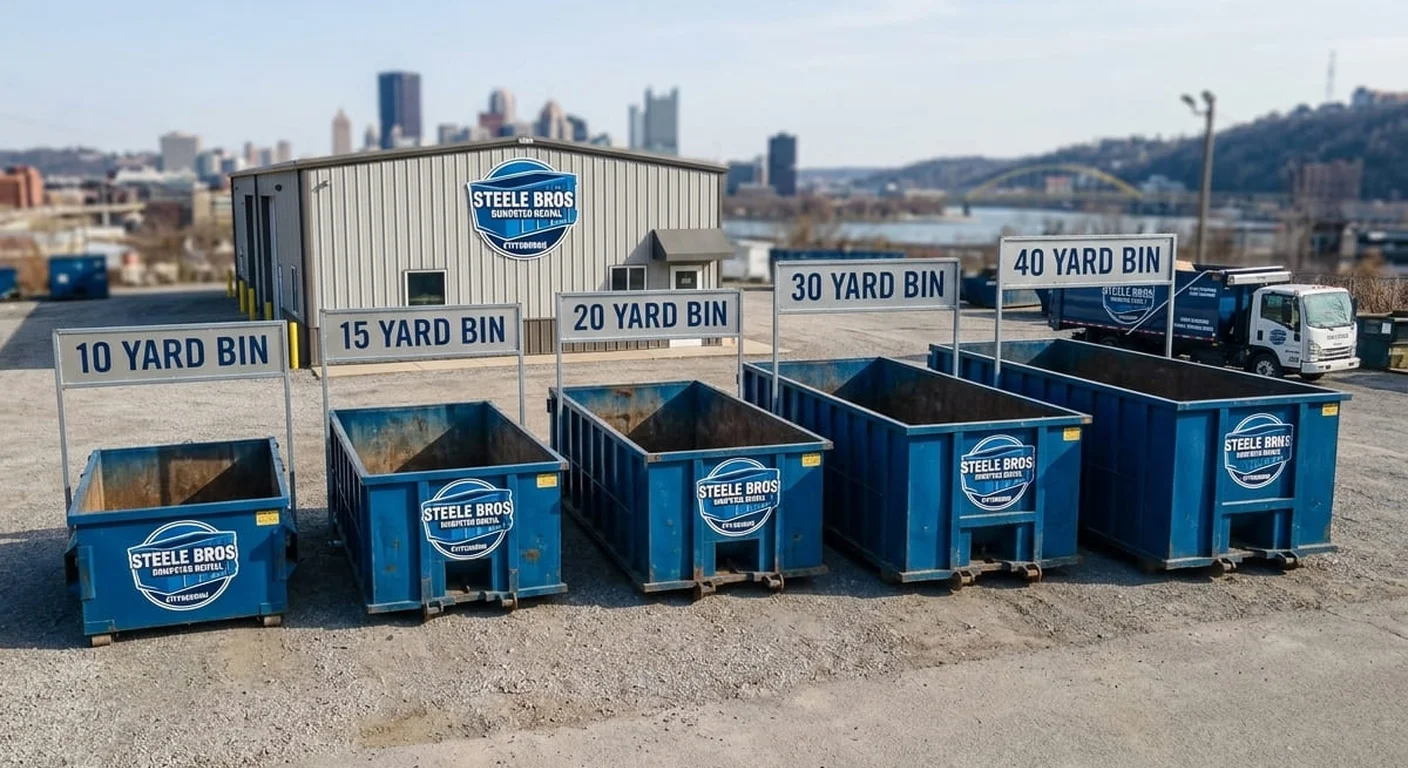
Dumpster Sizes in Pittsburgh, PA — 10, 15, 20, 30 & 40 Yard
Real dimensions, honest weight allowances and the projects each container is actually built for.
- Same-day & next-day delivery
- Flat-rate, all-in pricing
- Driveway protection included
- Same-Day DeliveryCall before noon and we can usually be there today.
- Flat-Rate PricingDelivery, pickup, disposal and tax quoted up front.
- Licensed & InsuredConnecting you with fully licensed and insured local haulers across Pennsylvania.
- Locally ConnectedA local Pittsburgh family business, based right here in Pittsburgh.
Side by side
Compare every size
Dimensions are approximate and vary slightly by container. Weight allowances are what is included in the flat rate before overage applies.
| Size | Dimensions (L × W × H) | Holds About | Weight Allowance | Best For |
|---|---|---|---|---|
| 10 Yard Dumpster | 14 ft x 7.5 ft x 3.5 ft | 3-4 pickup loads | 1-2 tons | Small cleanouts, single rooms, roofing, concrete |
| 15 Yard Dumpster | 16 ft x 7.5 ft x 4.5 ft | 5-6 pickup loads | 2-3 tons | Garage clearouts, small remodels, yard waste |
| 20 Yard Dumpster | 22 ft x 7.5 ft x 4.5 ft | 6-8 pickup loads | 3-4 tons | Whole-home cleanouts, roof tear-offs, remodels |
| 30 Yard Dumpster | 22 ft x 7.5 ft x 6 ft | 9-12 pickup loads | 4-5 tons | Large remodels, construction, estate clearances |
| 40 Yard Dumpster | 22 ft x 7.5 ft x 8 ft | 12-16 pickup loads | 5-6 tons | Commercial jobs, demolition, big builds |
10 Yard Dumpster
14 ft x 7.5 ft x 3.5 ft · holds about 3-4 pickup loads · 1-2 tons weight allowance.
Full specs15 Yard Dumpster
16 ft x 7.5 ft x 4.5 ft · holds about 5-6 pickup loads · 2-3 tons weight allowance.
Full specs20 Yard Dumpster
22 ft x 7.5 ft x 4.5 ft · holds about 6-8 pickup loads · 3-4 tons weight allowance.
Full specs30 Yard Dumpster
22 ft x 7.5 ft x 6 ft · holds about 9-12 pickup loads · 4-5 tons weight allowance.
Full specs40 Yard Dumpster
22 ft x 7.5 ft x 8 ft · holds about 12-16 pickup loads · 5-6 tons weight allowance.
Full specs
How to choose
Volume is only half the story
The mistake almost everyone makes is picking a size purely on how much stuff they can see. Volume matters, but weight is what actually decides whether you fit inside your flat rate — and around here, weight comes up faster than people expect.
Light and bulky vs heavy and dense
Furniture, boxes, insulation, carpet, decking and general household junk are bulky but light. With that kind of load you will run out of space long before you run out of tons, which is why a 30 or 40 yard makes sense for a big cleanout or a demolition job.
Brick, plaster, concrete, dirt, tile and wet debris are the opposite. A 10 yard packed with broken concrete is heavier than a 30 yard of couches. That is why heavy, dense material belongs in a smaller, dedicated 10 or 15 yard container rather than mixed with anything else.
Pittsburgh's older housing stock changes the math
A lot of homes in older Pittsburgh neighborhoods like Elliott and Sheraden, and in boroughs like McKees Rocks and Crafton, were built decades before modern drywall took over, with plaster-and-lath construction that weighs more than an equivalent area of new-construction debris. If you are gutting one of these older properties, size down on volume and budget up on weight — better to run two lighter loads than eat an overage. On the other end, newer builds around Robinson Township and Coraopolis run the opposite way — bulky, lightweight framing and packaging debris that fills a container's volume long before it comes close to the weight allowance.
Hills, access and winter weather matter as much as capacity
A 30 or 40 yard container needs about 60 feet of straight approach and roughly 23 feet of vertical clearance for a truck to raise the hoist. Steep, narrow streets around West End's hillside blocks, tight lots in older boroughs, and low tree canopy rule out the big boxes on plenty of Pittsburgh blocks. Snow, ice and a soaked yard after a freeze-thaw cycle also change what a hauler can safely reach — if in doubt, describe the driveway grade and recent weather on the phone, a two-minute conversation that saves a failed delivery.
Quick reference
A rough guide by project
| Project | Typical size | Watch out for |
|---|---|---|
| Single-room clearout or small remodel | 10 yard | Tile and old cast iron are heavier than they look |
| Clean concrete, brick, block or dirt | 10–15 yard (dedicated) | Must be a clean single-material load, weight-limited |
| Roofing tear-out or garage clearout | 10–20 yard | Shingles and old cardboard add weight fast |
| Kitchen or bathroom remodel | 20 yard | Cabinets are bulky; countertop stone is heavy |
| Whole-home cleanout, 3 bed with garage | 20–30 yard | Often two loads on an older in-city home |
| Larger remodel or addition | 30 yard | Plan swap-outs rather than one giant box |
| Construction or demolition project | 30–40 yard | Concrete footings must come out separately |
| Commercial cleanout or bulky light debris | 40 yard | Needs a big flat area and a long approach |
| Winter storm or ice-damage cleanup | 15–20 yard | Wet, ice-laden branches are heavier than they look |
Still not sure what size?
Describe the job in sixty seconds and we will match you with the right one. Call (412) 850-4148 — no obligation, no forms.
Answers
Frequently Asked Questions
What if I order the wrong size?
Call us. If it is too small we will connect you with a hauler who can bring a second container or swap it, and if you genuinely have not touched it, it can usually be exchanged for a different size the same or next day. It is far cheaper to make one call than to overfill a container — an overloaded box legally cannot be transported and will have to be leveled before it can be lifted.
How much space do I need for the container itself?
Allow roughly 10 feet of width and the container length plus about 15 feet of clearance behind it so a truck can set it and pick it up. A 10 yard needs about 25–30 feet of total run, a 30 or 40 yard closer to 60. Vertical clearance of around 23 feet is needed for the hoist — mind low tree canopy and overhead service drops, which come up often on {ADDR_CITY}'s hillside streets.
What happens if I go over the weight allowance?
The overage is charged per ton at a rate you are told up front, based on the scale ticket from the disposal facility. You get the actual ticket. Most residential customers never see one — it typically comes up on heavy material like plaster, tile, masonry or concrete that runs heavier than expected.
Can I fill it above the top rail?
No. The load has to sit level with the top rail so it can be tarped and legally transported on Pennsylvania roads. If it is heaped, the hauler cannot take it and you will need to level it before pickup. When you are loading, keep the bulky items flat and fill the voids rather than building a pile at one end.
Which size is most popular in Pittsburgh?
The 20 yard, by a wide margin. It is the sweet spot for whole-home cleanouts, mid-size remodels and roofing jobs, and its walls are low enough that you can throw things over the side rather than walking everything through the door — handy on some of this city's older, narrower homes. The 15 yard is the runner-up for garage clearouts and yard waste.