
Seasonal
Winter Storm Debris Cleanup Guide
Lake-effect snow, ice storms and freeze-thaw cycles are Allegheny County's real seasonal hazard. Here's how to plan a debris cleanup dumpster around them.
Ask anyone who's lived in Allegheny County through a full winter, and they'll tell you the storms here don't look like the postcard version. Lake-effect snow bands rolling off Lake Erie can dump a foot of snow on one side of the county and barely dust the other, on top of the regular parade of nor'easters that track up the East Coast and clip western Pennsylvania. Add in freeze-thaw cycles typical of a river-valley climate — where a 50-degree afternoon and a 15-degree overnight can happen in the same 48 hours — and you get a specific, predictable kind of seasonal damage that's worth planning for, not reacting to.
What Winter Actually Does to Pittsburgh-Area Properties
Freeze-thaw cycling is the real workhorse of winter damage here. Water gets into a crack in a driveway, a roofline, or aging mortar, freezes and expands, then thaws and refreezes again days later. Over a season, that cycle can crack pavement, pop shingles loose, and stress the joints on older homes — especially the pre-WWII housing stock common throughout Crafton, Green Tree, Carnegie and the other older boroughs in our service area. Heavy wet snow and ice accumulation add downed limbs and, occasionally, storm-damaged fencing, gutters and roofing on top of that.
Spring Flooding: The Follow-On Risk
Winter debris cleanup in Allegheny County often runs right into spring flood season. Pittsburgh sits at the confluence of the Allegheny, Monongahela and Ohio Rivers, and heavy snowmelt combined with spring rain raises real flood risk downtown and along the rivers. In the western part of our service area — Carnegie, Heidelberg, Bridgeville — Chartiers Creek carries its own flooding history and has caused significant property damage in past events. If winter storm damage overlaps with spring runoff, debris cleanup can become a two-phase job: storm debris first, then flood-damaged materials once water recedes.
What a Winter Storm Cleanup Dumpster Handles
- Downed tree limbs and storm-damaged brush
- Ice-damaged or wind-damaged fencing
- Storm-damaged roofing shingles
- Damaged gutters and downspouts
- Flood-damaged drywall, flooring and furniture, once water has receded (see our disposal guide for what's accepted)
Sizing for Storm Cleanup
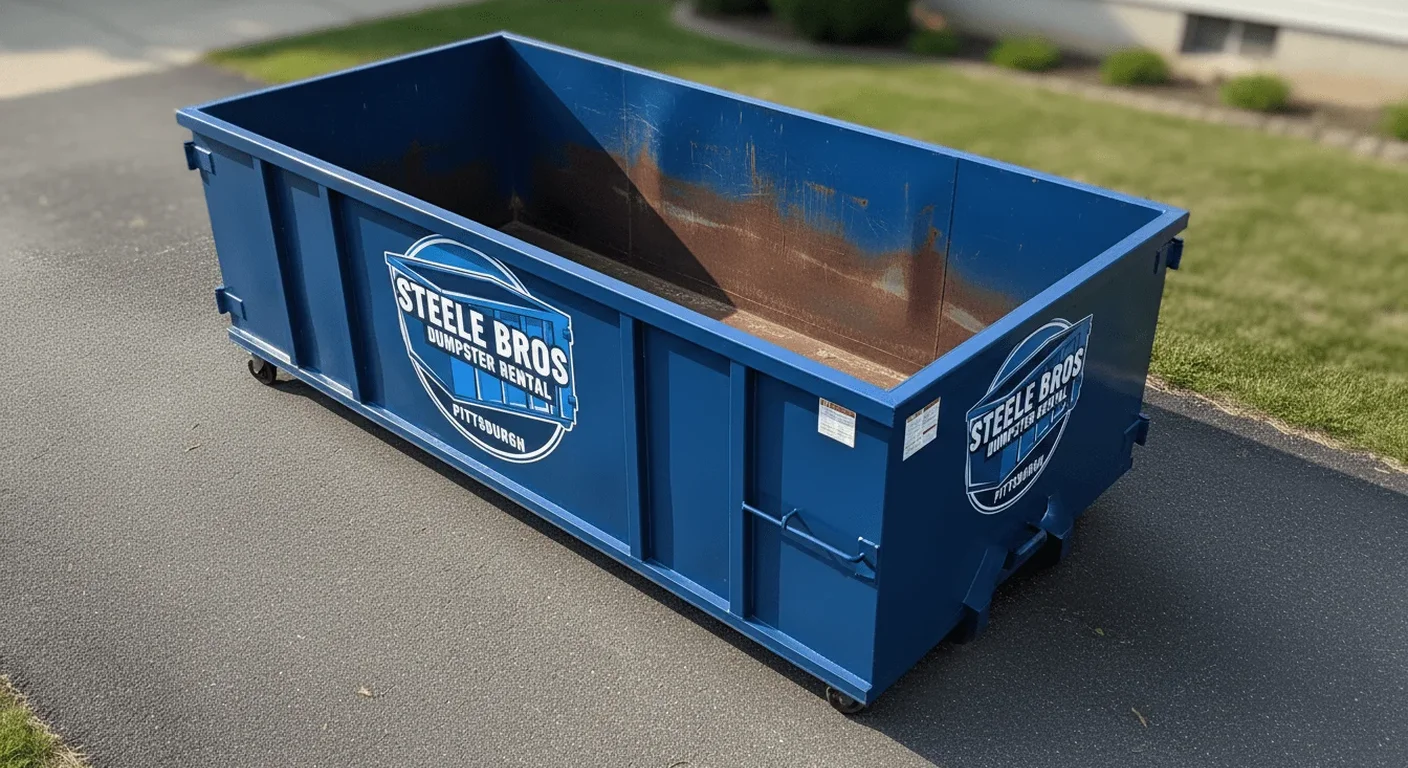
Most single-property storm debris cleanups fit a 15 or 20 yard container. Properties with multiple downed trees, or a combination of storm and flood damage, often need a 30. Our full sizing guide covers the full breakdown — but if you're not sure, describe the damage when you call and we'll help you size it over the phone.
Access Challenges Unique to Winter Delivery
Winter delivery across Allegheny County's hilly terrain comes with its own logistics. Steep, narrow driveways in older boroughs like Heidelberg or Elliott can be genuinely difficult to access safely when there's ice or packed snow underfoot. The hauler we match you with will factor current road and driveway conditions into the delivery plan — if your property has a challenging approach, mention it when you call so delivery gets scheduled for a window when access is safest.
Planning Ahead vs. Reacting
The properties that handle winter storm cleanup most smoothly are usually the ones that call before the next system hits, not just after. If you know your property has storm-prone trees, an aging roof, or a fence that's already showing wear, it's worth having a plan — and a hauler relationship — in place before the season's first major system, rather than scrambling afterward when everyone else in the county is calling at once.
After a Major System: What to Expect
Following a significant lake-effect event or ice storm, demand for cleanup containers across Allegheny County spikes quickly. Calling early in the aftermath — rather than waiting a week — improves your odds of a fast delivery window. Our same-day service is available where the hauler's schedule allows, which matters most in exactly this kind of post-storm scenario.
Yard Debris vs. Structural Damage
It's worth distinguishing between two different situations that both look like "storm cleanup." Downed limbs and yard debris are typically a same-day-to-next-day container job. Structural storm damage — a compromised roofline, storm-damaged siding — often needs a contractor assessment first, and the debris container becomes part of a larger repair project rather than a standalone cleanup. If you're not sure which situation you're in, describe what happened when you call and we'll help you figure out the right next step.
Insurance Documentation Before Disposal
If storm damage is significant enough that you're filing a homeowners insurance claim, photograph the damage thoroughly before anything goes in the container — downed limbs, damaged fencing, affected roofing sections. Adjusters generally want documentation of the damage as it was found, and once debris is hauled away that evidence is gone. This is worth doing even for damage that seems minor at first, since some storm-related issues, especially roof damage, aren't fully visible until a closer inspection.
Neighborhood-Wide Storm Response
Major systems tend to hit whole neighborhoods at once rather than single properties, which means container demand across a street or borough can spike together — everyone in Sheraden or Green Tree calling within the same day or two. If your street has widespread damage, coordinating delivery timing with neighbors, even informally, can sometimes help everyone get containers scheduled more efficiently than each household calling independently and competing for the same delivery windows.
Ready When the Next System Hits
Winter in Allegheny County is going to bring lake-effect snow, ice, and freeze-thaw stress on structures every single year — it's the region's defining seasonal hazard, not an occasional surprise. Call (412) 850-4148 after storm damage hits, or ahead of the season if you want a plan in place before it does, and we'll connect you with a local hauler ready to move quickly.
Need a container in Pittsburgh or anywhere in Allegheny County? Call (412) 850-4148 and describe the job. We will name the size, the flat rate and a delivery slot — often the same day. No forms, no waiting on an email.