
Permits & Placement
Do I Need a Dumpster Permit in Pittsburgh?
Private property, no permit. Street or sidewalk placement in the City of Pittsburgh, a DOMI right-of-way permit. Here's how it breaks down across every borough we serve.
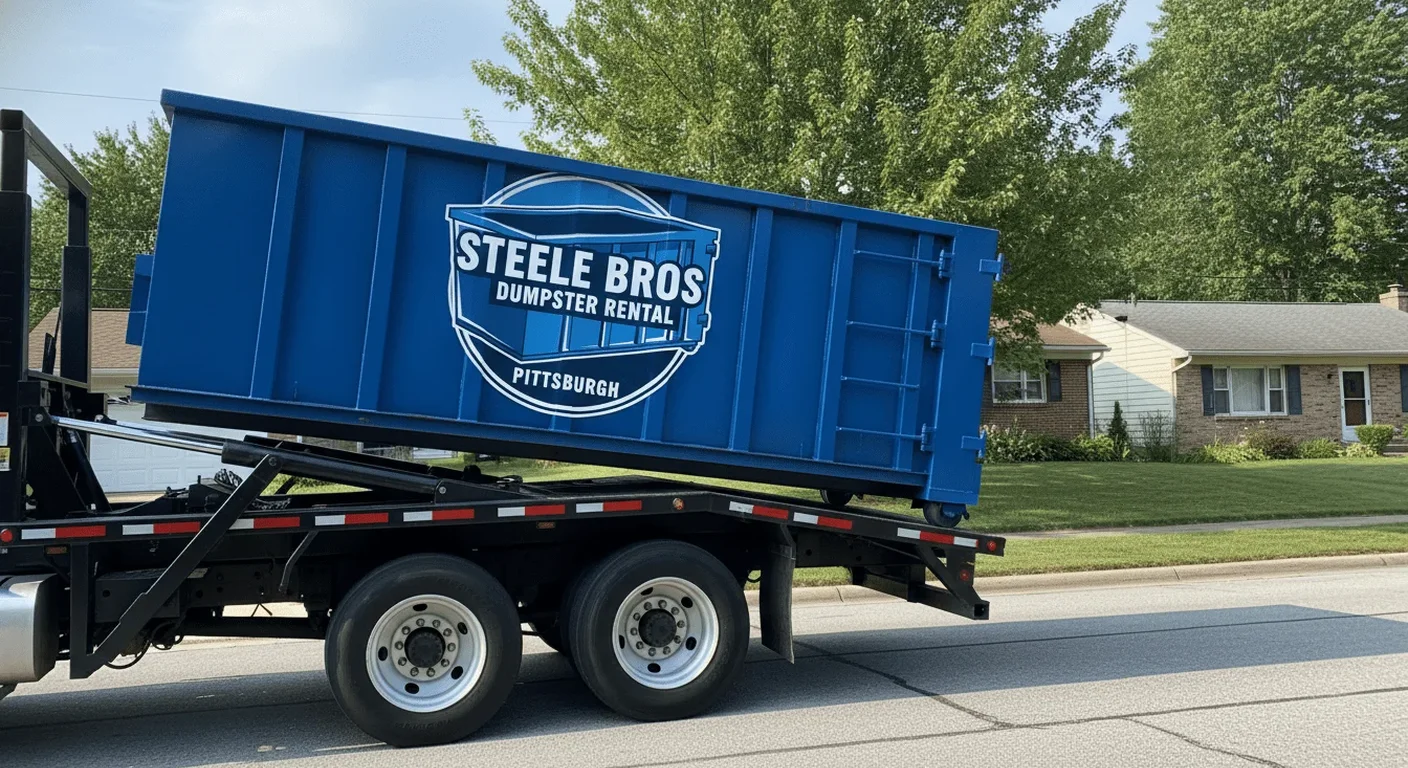
Permit questions come up on almost every call where a driveway is too short, too narrow, or already full of a work vehicle. The good news: for most residential and many commercial jobs across our Allegheny County service area, no permit is required at all. The rule that matters is simple — it's about where the container sits, not what kind of project it's for.
The Core Rule: Private Property vs. Public Right-of-Way
If the container sits entirely on private property — a driveway, yard, or parking lot — no permit is needed anywhere in our service area, whether that's a home in Sheraden or a commercial lot in Coraopolis. The moment a container needs to sit on a public street or sidewalk, permitting requirements kick in, and exactly who issues that permit depends on which municipality you're in.
City of Pittsburgh: DOMI Right-of-Way Permit
Inside the City of Pittsburgh — which covers our West End, Sheraden and Elliott service area — placing a container on a public street or sidewalk requires a temporary right-of-way permit from the City's Department of Mobility and Infrastructure (DOMI). This is a standard, routine permit for temporary construction-related street use, not a special exception — DOMI processes these regularly for roll-off containers, PODS-style units and construction equipment across the city. If your driveway can't accommodate the container, ask when you call and we'll help you figure out whether street placement and a permit make sense for your job.
Independent Boroughs: Check With the Local Permit Office
Crafton, Green Tree, Carnegie, Robinson Township, Coraopolis, Bridgeville, Heidelberg and McKees Rocks are all independent municipalities with their own local government — not part of the City of Pittsburgh — and each runs its own permit process for public right-of-way placement. Rules and application steps vary somewhat borough to borough, so if your project needs street placement outside city limits, check with that borough's own permit office directly. We're happy to help you figure out who to call.
| Placement | Permit Needed? | Who Issues It |
|---|---|---|
| Private driveway or yard (anywhere in our service area) | No | N/A |
| Street or sidewalk in City of Pittsburgh (West End, Sheraden, Elliott) | Yes | City of Pittsburgh DOMI |
| Street or sidewalk in an independent borough (Crafton, Green Tree, Carnegie, Robinson Township, Coraopolis, Bridgeville, Heidelberg, McKees Rocks) | Usually yes | That borough's own permit office |
Why Placement Location Matters So Much Here
Pittsburgh's terrain makes this more than a paperwork detail. Older boroughs were laid out with narrow streets, tight lots and steep driveways long before roll-off containers existed as a common delivery. A driveway that looks adequate on paper might have a grade or angle that makes container placement impractical, pushing the job to street placement — and a permit — by necessity rather than convenience. Mentioning your driveway's slope, width and any obstructions when you call helps the hauler plan the right approach before the truck ever shows up.
How Long Does a Permit Take?
Processing time varies by municipality and time of year, so it's worth applying as early as you can once you know street placement is necessary — don't wait until the week you want delivery. If your project has a tight timeline, mention it when you call; we can help you sequence the permit application and the delivery date so you're not paying for rental days while waiting on paperwork.
What Happens Without a Permit
Placing a container on a public street or sidewalk without the required permit can result in a citation from the municipality, and in some cases the container may need to be moved or removed, which delays your project and adds cost. It's a step worth doing right the first time rather than working around.
Call-Before-You-Dig: A Separate but Related Step
If your project involves any excavation — a foundation repair, a fence post, landscaping work — Pennsylvania law requires you to contact the Pennsylvania One Call System (811, pa1call.org) before digging, regardless of whether your dumpster needs a placement permit. This is a separate requirement from container placement but often comes up on the same renovation or construction jobs, so it's worth planning for both at once.
Tips for a Smooth Permit Process
- Confirm which municipality your property is in — West End, Sheraden and Elliott fall under the City of Pittsburgh; the other eight towns we serve each have their own office
- Apply as early as possible once you know street placement is needed
- Measure your driveway before assuming you need street placement at all — many properties fit a container on private property without any permit
- Ask us when you call — we help route this question every week and can point you to the right office
Commercial and Job Site Permits
Commercial properties and active construction job sites follow the same underlying rule — private lot, no permit; public right-of-way, permit required — but commercial permit applications sometimes involve additional site plan detail depending on the municipality, especially for a longer-duration placement tied to a multi-week renovation or build. If you're managing a commercial project, mention the expected placement duration when you apply so the permit covers the full timeline rather than needing renewal partway through.
Not Sure Which Applies to You? Just Call
Every job's permit situation is a little different depending on the property and the municipality. Call (412) 850-4148 and tell us your address and driveway situation — we'll help you figure out whether you need a permit at all, and if so, point you toward the right office before delivery day.
Need a container in Pittsburgh or anywhere in Allegheny County? Call (412) 850-4148 and describe the job. We will name the size, the flat rate and a delivery slot — often the same day. No forms, no waiting on an email.