
Contractors
Construction Debris Disposal Guide
A practical guide for contractors managing construction and demolition debris across Pittsburgh job sites, from container scheduling to PA DEP disposal rules.
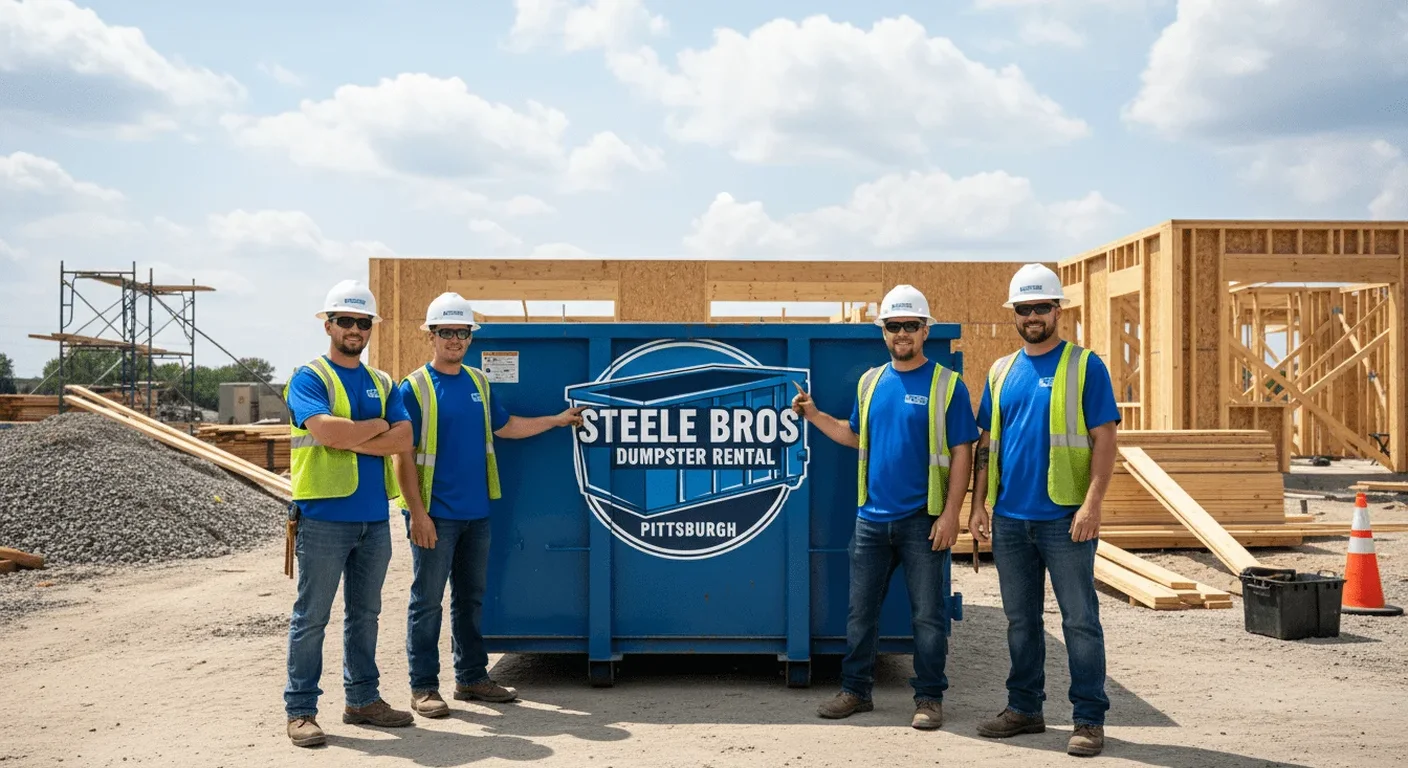
Contractors working across Pittsburgh and Allegheny County deal with a different set of pressures than a homeowner booking a one-off cleanout container. Job sites generate debris continuously, schedules shift, and a container that sits too long — or gets swapped too slowly — costs real time. Here's how we help contractors plan construction debris disposal that keeps pace with the job instead of holding it up.
Construction Debris Is a Different Category
Construction and demolition (C&D) debris covers a specific mix: lumber, drywall, tile, flooring, roofing materials, and in demolition work, concrete, brick and masonry. Pennsylvania's Department of Environmental Protection (PA DEP) regulates C&D waste disposal through its construction and demolition waste program, and licensed disposal facilities across Allegheny County process this material under those rules. Every hauler in our network works within that regulatory framework, which is part of why we only connect projects with licensed, insured local haulers rather than unregulated pickup.
Common Job Site Scenarios
Renovation and Remodel Sites
Kitchen and bathroom gut jobs, room additions and full-home renovations typically generate a steady, moderate stream of debris over a multi-week job. A 15 or 20 yard container with a scheduled swap partway through the job often works better than one oversized container sitting the whole time.
Demolition Projects
Partial or full structure demolition generates dense material fast — concrete, brick, masonry — that hits weight limits quickly. These jobs typically need smaller containers sized for weight rather than volume, sometimes with multiple swaps in a single day for a larger teardown. See our sizing guide for how weight and volume interact on dense-material jobs.
New Construction and Framing
Framing and finish-out debris on new builds in growth areas like Robinson Township and Coraopolis tends to run larger volume, lower density — offcuts, packaging, drywall scrap. A 30 or 40 yard container with a rotating swap schedule usually fits multi-lot or multi-phase builds best. Our new-construction cleanup guide covers this scenario in detail.
Scheduling Container Swaps
The biggest efficiency lever on any multi-week job site is matching container swap frequency to your actual debris generation rate, not a fixed calendar. A framing crew moving fast might fill a 30 yard in three days; a finish-out crew doing trim and paint might take two weeks to fill the same container. Talk through your project phase and expected pace when you book so the hauler can plan a swap schedule that matches your crew's actual output instead of a generic default.
| Job Phase | Debris Type | Typical Container Approach |
|---|---|---|
| Demolition | Concrete, brick, masonry | Smaller container (10-15 yd), frequent swaps for weight |
| Framing | Lumber offcuts, packaging | Larger container (30-40 yd), moderate swap frequency |
| Rough-in / drywall | Drywall scrap, wiring/plumbing waste | Mid-size (20 yd), steady swap schedule |
| Finish-out | Trim scrap, flooring, packaging | Mid-size (15-20 yd), slower swap pace |
Multi-Property and Multi-Lot Jobs
Builders and contractors working several properties at once across Allegheny County — say, a few lots in Robinson Township plus a renovation in Green Tree — benefit from coordinating all containers through a single point of contact rather than calling separately for each site. We can help manage scheduling across multiple active jobs so deliveries and swaps stay predictable across your whole project list.
Site Access on Pittsburgh Job Sites
Construction sites in older, tighter parts of the city and in hillside boroughs bring access challenges a suburban flat-lot job doesn't. Narrow streets in Elliott or McKees Rocks, limited parking during active construction, and steep grades all affect where a container can realistically sit. Flag site access details when you book — especially for a longer job where the container needs to sit in the same spot for weeks.
Permits for Job Site Placement
If a construction container needs to sit in the public right-of-way rather than entirely on the lot, City of Pittsburgh projects need a DOMI right-of-way permit, and independent boroughs each have their own permit process. Our permits guide covers this in full — worth checking before the job starts if lot space is tight.
Staying Compliant on Every Job
Working with licensed, insured haulers matters for more than convenience — it keeps your job site compliant with Pennsylvania C&D disposal rules without you having to track disposal facility licensing yourself. Every hauler we connect to a construction job in our network is vetted on exactly that basis.
Working With General Contractors and Subs
On larger jobs with several trades on site, it helps to have one person — usually the general contractor or site super — as the point of contact for container status. Debris generation rarely lines up neatly with a single trade's schedule once framers, electricians and drywall crews overlap, so a single point of contact keeps swap timing accurate instead of getting lost between subcontractors.
Seasonal Timing for Pittsburgh Job Sites
Construction schedules across Allegheny County are seasonally affected more than in milder climates. Winter freeze-thaw conditions and lake-effect snow can slow site prep and exterior work, which shifts debris generation timelines later than a job planned purely on paper. If your project spans the winter months, build some flexibility into your container schedule rather than assuming a fixed weekly swap will hold through the season.
Planning Your Next Job
Whether it's a single remodel or a multi-lot build, call (412) 850-4148 and walk us through the project scope and timeline. We'll help you plan container sizing and swap frequency around your actual construction schedule across Pittsburgh and Allegheny County.
Need a container in Pittsburgh or anywhere in Allegheny County? Call (412) 850-4148 and describe the job. We will name the size, the flat rate and a delivery slot — often the same day. No forms, no waiting on an email.