
Roofing
Roofing Tear-Off Dumpster Sizing Guide
Shingles are heavy. Here's how roof size, number of layers and material type determine the right container size for a Pittsburgh-area tear-off.
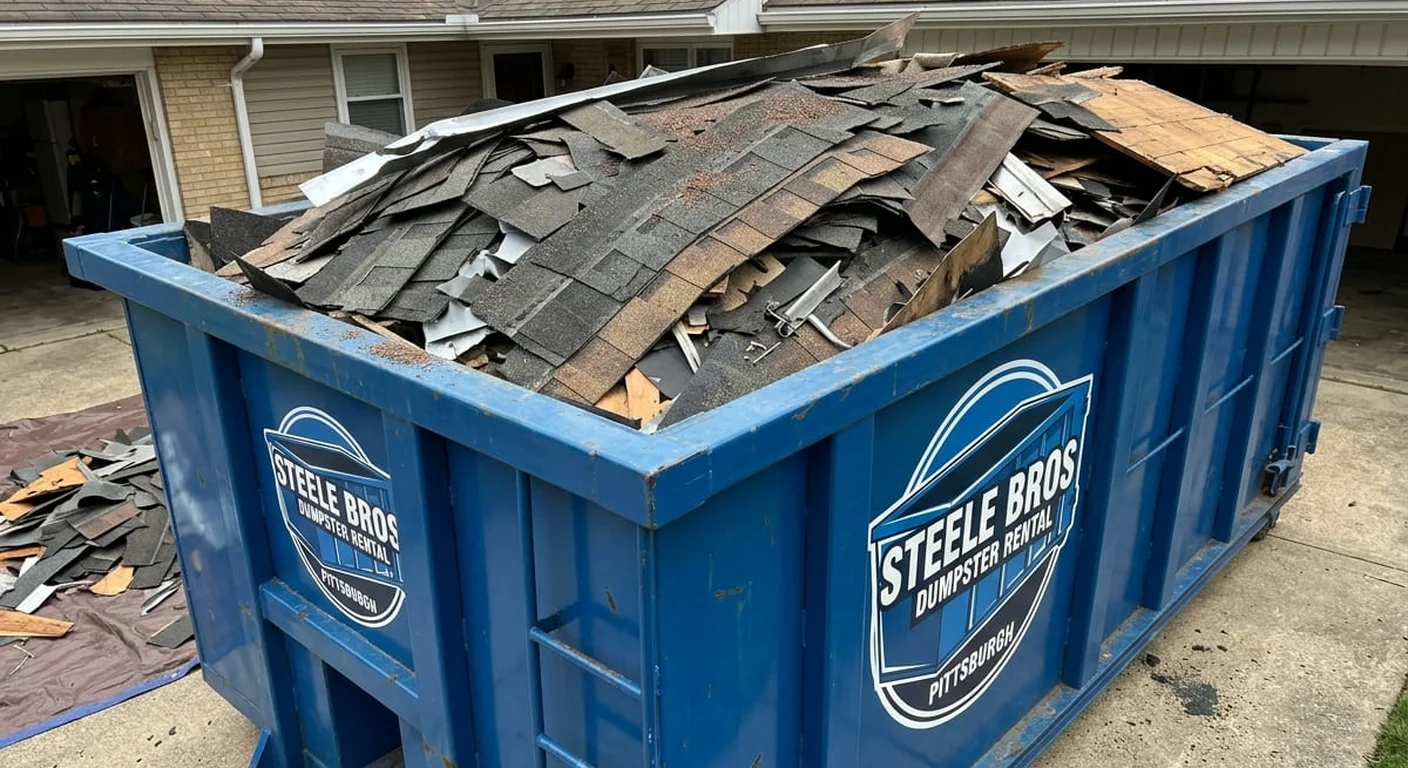
Roofing tear-offs are one of the most common jobs where getting the container size wrong actually matters — asphalt shingles are dense enough that volume alone is a misleading way to size the job. We connect Pittsburgh-area homeowners and roofing contractors with haulers who size tear-off jobs by weight first, footprint second. Here's how that math works.
Why Roofing Debris Is Different
A typical container full of furniture or general household debris is limited by volume — it looks full before it's anywhere near the weight limit. Roofing shingles flip that relationship. A modest pile of torn-off shingles can hit a container's weight limit while the box still looks half-empty. That's the single biggest thing to understand before booking a tear-off container: think tonnage, not cubic yards.
Factors That Determine Size
| Factor | Why It Matters |
|---|---|
| Roof square footage | More roof area means more total shingle weight to remove |
| Number of shingle layers | A two-layer tear-off roughly doubles the weight versus a single layer, without doubling the visible volume |
| Shingle type | Standard three-tab and architectural asphalt shingles both add up fast; heavier shingle products weigh more per square |
| Underlayment and decking | If decking or underlayment is also being replaced, that adds separate weight and volume |
General Sizing Guidance
- Single-layer tear-off, average-size roof: typically fits a 20 yard container
- Two-layer tear-off or larger roofline: often needs a 30 yard, sized for the added weight
- Small roof section or partial repair: a 10 or 15 yard may be enough — describe the job and we'll help confirm
These are starting points, not guarantees — every roof is different. See our full dumpster sizing guide for how these five sizes compare across every project type, not just roofing.
How Many Layers Are Up There?
If you're not sure how many layers of shingles are currently on the roof — common with older homes in Pittsburgh's established boroughs that may have been re-roofed over existing layers rather than torn off — a roofing contractor can usually tell quickly. Mention it when you book so the container gets sized for the actual weight involved, not just a guess based on roof size alone.
Older Homes and Multiple Layers
Pre-WWII housing common throughout Crafton, Green Tree, Elliott and other established Pittsburgh-area neighborhoods sometimes has a longer roofing history — multiple re-roofs over decades before a full tear-off finally happens. If your home falls into that category, plan for the heavier end of the sizing range, since a multi-layer tear-off on an older roof can generate significantly more weight than a straightforward single-layer job on a newer home.
Weather Timing for Roofing Projects
Roofing work in Allegheny County is weather-dependent in a way that affects container scheduling too. Freeze-thaw conditions and lake-effect snow through the winter months push most tear-off work into spring through fall, which means container demand for roofing jobs clusters seasonally. Booking a bit ahead during peak roofing season — rather than the week you want the crew on the roof — improves your odds of the delivery window you want.
Contractor vs. Homeowner Tear-Offs
Roofing contractors managing multiple jobs across our service area often set up a standing container relationship rather than booking each job individually — useful if you're running several tear-offs a season. Homeowners doing a one-off re-roof should describe the roof's approximate size and number of layers when booking; that's usually enough for the hauler to recommend an accurate size without a site visit.
What Else Goes in a Roofing Container
Beyond shingles themselves, tear-off containers commonly also take:
- Underlayment and felt paper
- Flashing and old vents
- Damaged decking boards, if being replaced
- Gutter sections, if being replaced as part of the same project
All of these are standard accepted materials — see our full materials guide for the complete list.
Storm-Damaged Roofs: A Related Scenario
If your tear-off is happening because of storm damage rather than a planned renovation, sizing considerations are similar, but timing often isn't — storm-damaged roofs frequently need faster turnaround. Our winter storm debris cleanup guide covers how post-storm scheduling works across the county.
Placement During a Tear-Off
Roofing tear-offs generate a lot of falling debris directly around the container, so placement matters more here than for a typical cleanout — as close to the work area as the driveway or street allows, without sitting under power lines or low tree limbs the crew needs clearance from. On tighter lots in older boroughs, discuss placement with both your roofing crew and the hauler before delivery day so everyone's working from the same plan.
Timing the Swap on a Larger Tear-Off
On a larger or steeper roof, some crews fill a container faster than expected once tear-off actually starts, especially with a multi-layer job. If your roofer flags early on that the job is running heavier than planned, call ahead rather than waiting until the container is already at capacity — arranging a same-day or next-day swap is far easier when it's scheduled ahead of the crew hitting the limit than when work has to pause and wait on an unplanned pickup.
Get an Accurate Size Before Tear-Off Day
Call (412) 850-4148 and tell us your roof's approximate square footage and how many layers are coming off. We'll help you land on the right container size so the crew isn't waiting on a mid-job swap because the first box filled up faster than expected.
Need a container in Pittsburgh or anywhere in Allegheny County? Call (412) 850-4148 and describe the job. We will name the size, the flat rate and a delivery slot — often the same day. No forms, no waiting on an email.