
Pricing
What Drives Dumpster Rental Cost?
Four factors set the flat rate for a container in Pittsburgh and Allegheny County: size, debris type, delivery location and rental duration. Here's how each one works.
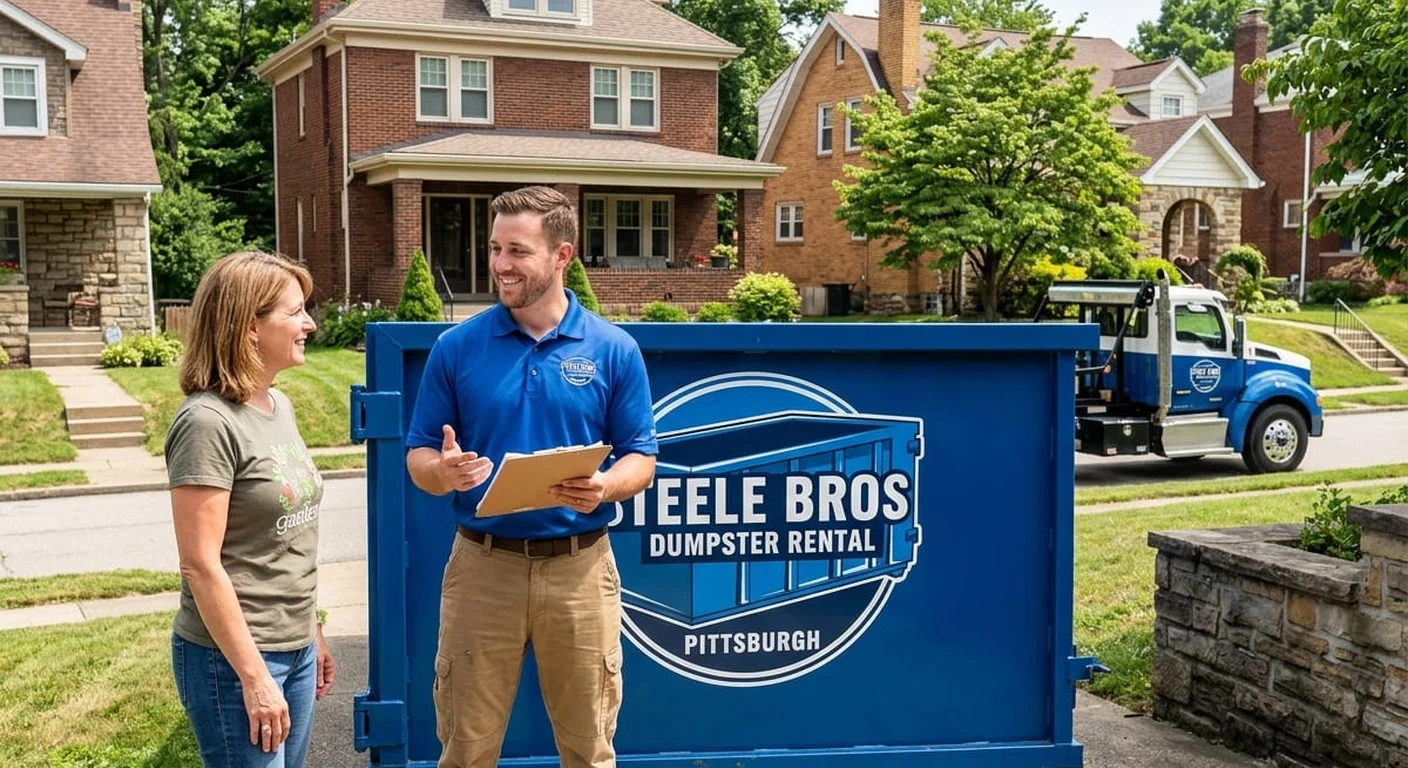
People calling about a container in Pittsburgh almost always ask the same second question right after size: "so what's this going to run me?" We can't publish a single number that would be honest for every job, because the flat rate a hauler in our network quotes depends on a handful of real, predictable factors — not a mystery formula. This guide breaks down exactly what drives the number so you understand your quote instead of just trusting it.
The Four Factors That Set the Rate
Every quote you get from a hauler in our network is built from the same four inputs. Understanding them means you can anticipate roughly where your project lands before you ever pick up the phone.
| Factor | What It Affects | Why It Matters in Pittsburgh |
|---|---|---|
| Container size | Base rate | A 10 yard and a 40 yard aren't the same truck trip, disposal weight, or footprint — bigger containers cost more to deliver, haul and process |
| Debris type & weight | Disposal/tipping cost | Dense material like shingles, concrete, brick and river-valley clay costs more to dispose of by the ton than bulky-but-light household junk |
| Delivery location | Trip cost & access | Pittsburgh's hills mean some deliveries are a straightforward flat-lot drop; others involve a steep, narrow street in an older borough that takes longer to navigate |
| Rental duration | Total rental cost | The standard rental period covers most projects; extending it beyond that window adds to the total |
Size: The Starting Point
Size is the first lever, and it's the one most people already have a rough sense of before they call — see our full sizing guide if you haven't settled on one yet. A 10 yard for a garage cleanout and a 40 yard for a new-construction site are fundamentally different jobs for the hauler: different truck configurations, different disposal volume, different time on site. Right-sizing isn't just about fit — an oversized container for a light job means paying for capacity that never gets filled.
Debris Type and Weight
This is the factor people underestimate most. Two containers of the same size can carry very different disposal costs depending on what's inside. Roofing shingles, concrete, brick, dirt and wet drywall are all dense — they hit a weight limit long before the container looks full, and disposal facilities price by weight, not by how full a box looks. General household debris, furniture and yard waste are bulkier but lighter by comparison. Be upfront about what's actually going into the container when you call; it's the single best way to get an accurate quote instead of a surprise adjustment later. Our materials guide covers what's accepted and what isn't.
Delivery Location
Pittsburgh's terrain genuinely affects logistics in a way flatter cities don't deal with. A drop on a wide, flat driveway in Robinson Township or Coraopolis is a routine job. A drop on a steep, narrow street in an older borough like Crafton, Green Tree or Heidelberg — some laid out well before roll-off trucks were a consideration — can take more time and careful positioning, and street placement anywhere in the City of Pittsburgh may also require a temporary right-of-way permit (see our permits guide). Delivery location and site access are always part of the conversation when you call for a quote.
Rental Duration
The standard rental period is seven days, which covers the vast majority of cleanouts, remodels and single-phase construction jobs comfortably. Projects that run longer — a whole-home cleanout that hits an unexpected snag, or a renovation with a shifting timeline — can have the rental extended. If you already know your project will run past a week, mention it up front so the quote reflects the real timeline instead of an assumed one.
Why We Don't Publish a Price List
We're a connection service, not the operator setting the meter — we match your project with a local, licensed and insured hauler from our network, and that hauler prices the job based on the four factors above. A generic price list would either be too low to be honest for a heavy-debris job in a hard-to-access borough, or too high for a straightforward light cleanout on a flat driveway. A phone call where you describe the actual project gets you an accurate flat rate in a couple of minutes — faster and more honest than a table of numbers that doesn't match your job.
How to Get the Most Accurate Quote
- Know roughly what size you need, or describe the project and let us help size it
- Be specific about debris type — mention shingles, concrete, drywall or yard waste by name
- Describe the delivery site — driveway or street, flat or sloped, any tight turns or overhead obstructions
- Tell us your expected timeline, especially if it's likely to run past a week
With those four pieces of information, the hauler we match you with can give you a flat rate with no surprise add-ons at pickup — the quote you get on the phone is the number you pay.
Comparing Costs Across Project Types
Different project types tend to cluster around different combinations of these four factors. A small garage cleanout is usually low on all four — smaller size, light debris, easy access, short duration. A roofing tear-off (see our roofing sizing guide) is often a mid-size container but with dense debris, which pushes the weight-driven part of the quote up even though the container itself isn't large. A new-construction site (our new-construction guide covers this) tends to be large on every factor — big containers, mixed heavy debris, and multiple weeks on site. Knowing which category your project falls into helps set realistic expectations before you call.
Need a container in Pittsburgh or anywhere in Allegheny County? Call (412) 850-4148 and describe the job. We will name the size, the flat rate and a delivery slot — often the same day. No forms, no waiting on an email.